Speaking
Sessions people act on after they leave the room.
Security talks fail when they are either too abstract to use or too technical to follow. Every session is built for the specific audience: executives, engineers, or people trying to get into the field.
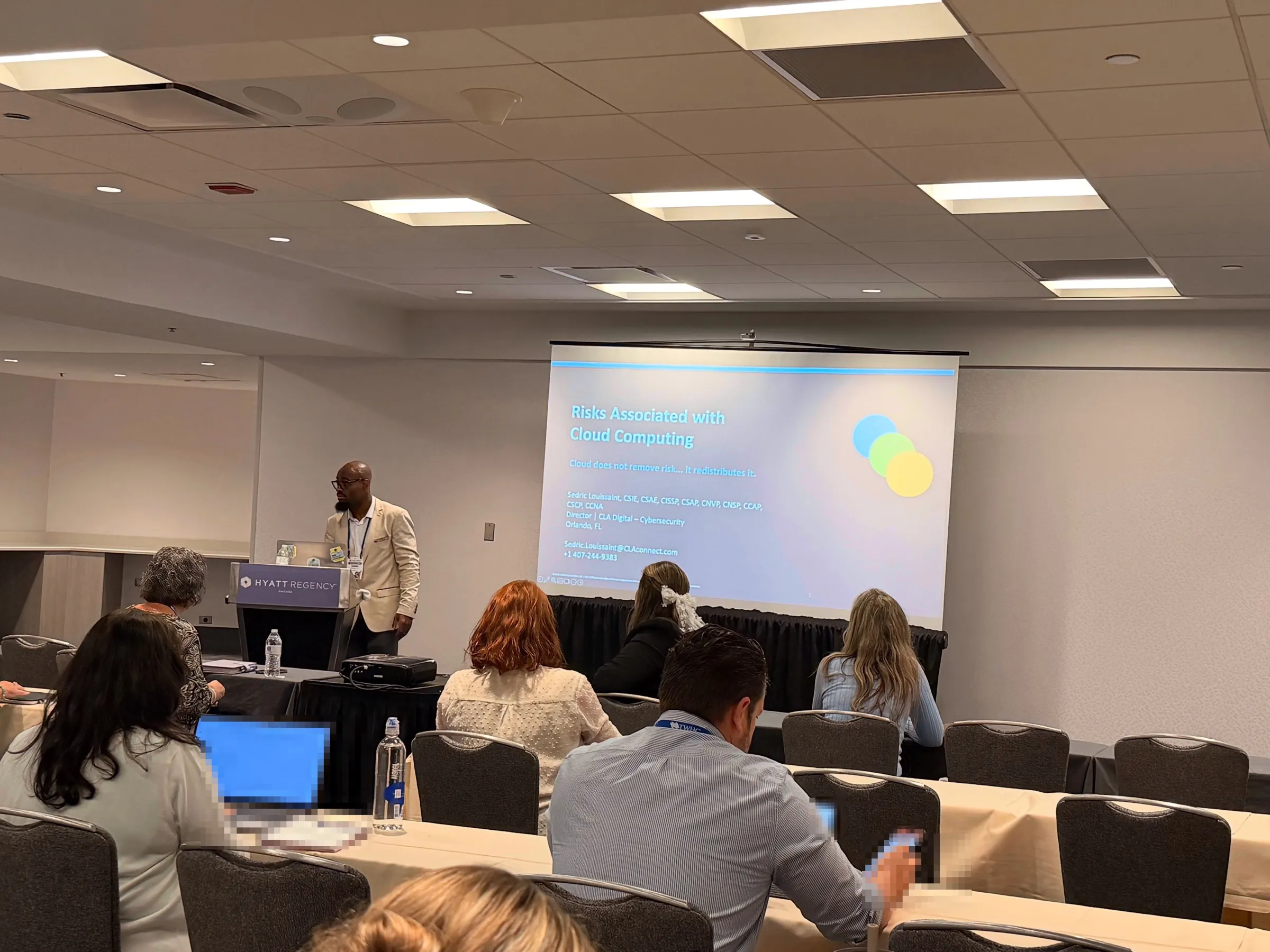
Topics
These are starting points. Sessions are usually adapted to the audience and the specific concerns you want addressed.
- 01
Cybersecurity awareness that sticks
What the current threats actually look like for your people, and the handful of habits that prevent most of them. Built for a general audience, not a security team.
- 02
Building a security strategy that survives contact
How to align security work with what the business is actually trying to do, and how to defend that plan when budget season arrives.
- 03
Incident response before the incident
What a response plan needs to contain, who needs to have read it, and the decisions that are far cheaper to make in advance.
- 04
Managing cyber risk at the leadership level
For executives and boards: how to interrogate what you are being told about risk, and what questions reliably surface the real picture.
- 05
Breaking into cybersecurity
For students and career changers: what the field actually rewards, which credentials are worth the money, and how to get the first role.
Formats
Keynotes
Conferences and company events, in person or remote.
Workshops
Hands-on sessions for technical teams, typically half or full day.
Webinars
Hosted or co-hosted sessions, including moderated panels.
Team training
Internal security training built for your stack and your risks.
Panels
Panel participation and moderation.
Media
Commentary and interviews for television, radio, podcasts, and print.
Planning an event?
Send over the date, audience, and what you want people to walk away with.