Epstein Files Public Archive: Justice/Transparency/Accountability
Why I Built EpsteinFTA.com: A Public Archive for Justice, Transparency, and Accountability
Why I Built EpsteinFTA.com: A Public Archive for Justice, Transparency, and Accountability
The public deserves more than silence
There are certain cases that should never be allowed to disappear into the fog of bureaucracy, political convenience, or public fatigue.
The Jeffrey Epstein case is one of them.
For years, the public has been told fragments of the story. We have seen court filings, government disclosures, investigative reporting, congressional releases, survivor testimony, flight logs, depositions, estate documents, and thousands upon thousands of pages of records. Yet even with all of that, the full picture remains difficult for the average person to access, search, understand, and analyze.
That is why I created EpsteinFTA.com, a public document archive dedicated to making Epstein-related records easier to find, search, and study.
This platform exists for one simple reason: justice requires transparency.
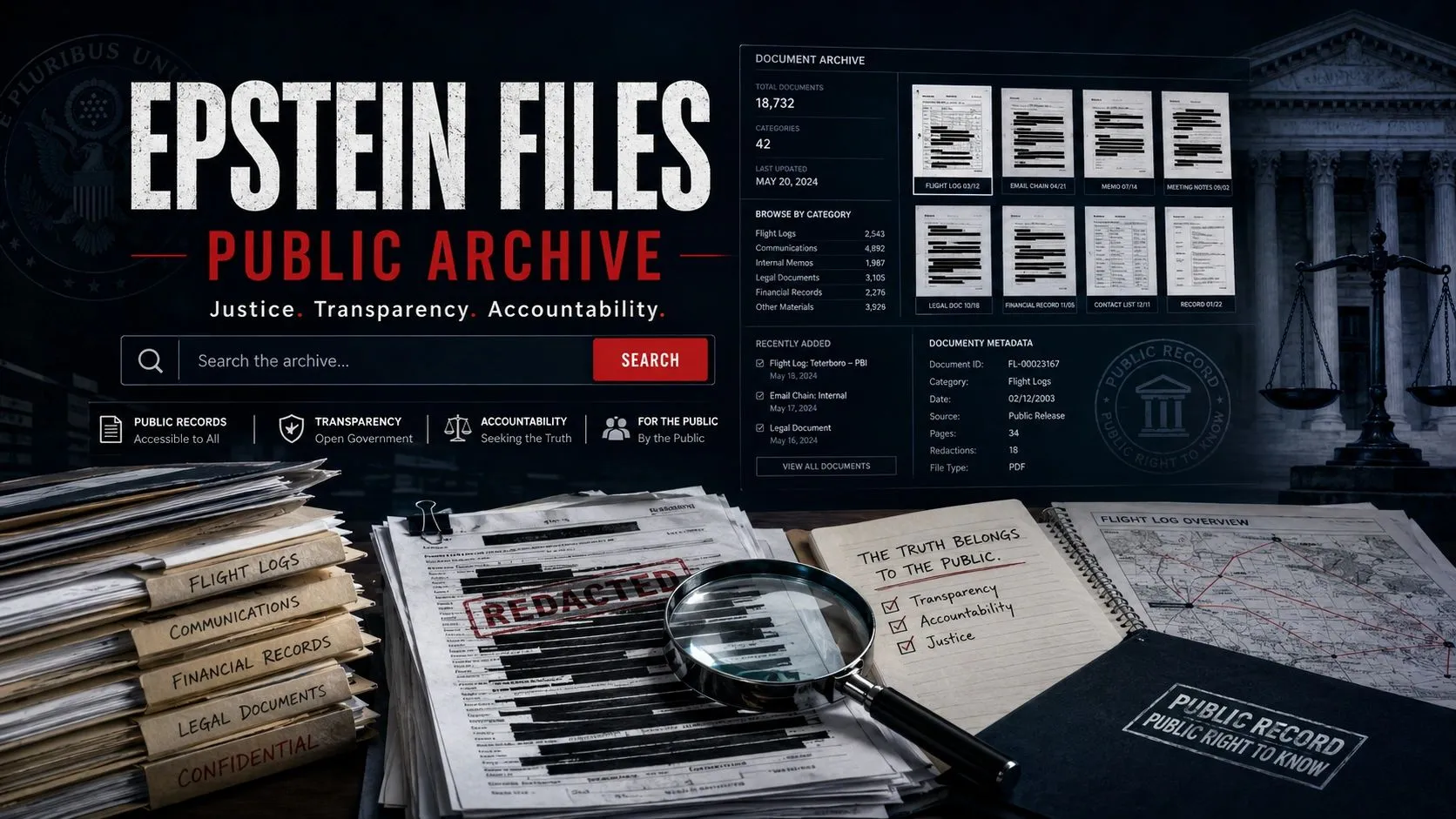
EpsteinFTA.com provides public access to documents related to the Jeffrey Epstein case, including court records, DOJ disclosures, flight logs, and other official documents. The purpose of the platform is to support research, improve transparency, enable independent analysis, and preserve public access. The documents speak for themselves.
Transparency should not depend on who has the time, money, or technical skill to dig
One of the biggest problems with major public document releases is that “available” does not always mean accessible.
A government agency can publish millions of pages, but if those files are scattered, hard to search, inconsistently organized, poorly indexed, or buried behind technical limitations, the practical effect is that only a small number of people can realistically review them.
The Department of Justice’s own Epstein Library search page warns that some documents may not be electronically searchable or may produce unreliable search results because of technical limitations and the format of certain materials, including handwritten text.
That matters.
Because when the public is told documents have been released, the next question should be: released in a way that ordinary people, journalists, researchers, survivors, advocates, and watchdogs can actually use?
Public access should not be theoretical. It should be practical.
That is the gap EpsteinFTA.com is trying to help fill.
The scale of the records makes independent access essential
The volume of Epstein-related records is enormous.
The Department of Justice announced on January 30, 2026, that it published more than 3 million additional pages responsive to the Epstein Files Transparency Act. DOJ said the release included more than 2,000 videos and 180,000 images, bringing the total production to nearly 3.5 million pages.
The House Oversight Committee has also released Epstein-related records, including 33,295 pages provided by the Department of Justice in September 2025 and an additional 20,000 pages of estate documents in November 2025.
Those numbers are staggering.
But a massive document dump is not the same as meaningful transparency.
Transparency requires organization. It requires searchability. It requires preservation. It requires the public to have a realistic way to inspect the material and compare what has been released, what has been withheld, what has been redacted, and what still raises questions.
This is not about conspiracy. It is about accountability.
EpsteinFTA.com is not built to push rumors.
It is not built to accuse people without evidence.
It is not built to replace courts, investigators, journalists, or survivor advocates.
It is built to preserve access to public records and allow people to review primary source material for themselves.
That distinction matters because serious accountability cannot be built on speculation. It has to be built on documents, timelines, testimony, evidence, and facts.
The public has a right to ask hard questions. The public has a right to expect institutions to explain what happened, who enabled it, who failed to act, and why accountability has been so limited.
But if we are going to demand answers, we have to ground that demand in records.
That is what this platform is for.
Survivors deserve better than performative transparency
At the center of this case are real people who were harmed.
That should never be forgotten.
Every discussion about the Epstein files must be handled with care, especially because some released materials may contain sensitive or private information. The DOJ itself has warned that, due to the volume of material involved, its website may contain information that inadvertently includes non-public personally identifiable information or other sensitive content, including matters of a sexual nature.
That warning highlights the tension at the center of this issue.
The public needs transparency. Survivors need dignity and protection.
Those goals should not be treated as opposites. A responsible transparency effort should push for accountability while also recognizing that victims and survivors should not be re-traumatized by careless disclosure, sloppy redactions, or public exploitation of sensitive material.
Justice is not served by hiding the truth.
But justice is also not served by exposing survivors to unnecessary harm.
The public cannot let this fade away
One of the most dangerous things that can happen in a case like this is that the public simply moves on.
The news cycle changes. Politicians pivot. Institutions wait out the outrage. People become overwhelmed by the volume of records and the complexity of the story.
Then the pressure disappears.
That cannot happen here.
The Epstein case exposed deep questions about wealth, power, influence, institutional failure, law enforcement decisions, prosecutorial discretion, and how some people appear to move through systems of accountability differently than everyone else.
Those questions do not become less important because time passes.
They become more important.
Because if the public cannot demand full transparency in a case this significant, what does that say about our ability to hold powerful people and institutions accountable anywhere else?
Why EpsteinFTA.com matters
EpsteinFTA.com is my contribution to the transparency fight.
The site is designed to help people search and analyze Epstein-related public records in one place. It exists to make the material more accessible and to preserve access as the public continues to ask questions.
This kind of work takes resources. Hosting, indexing, organizing, improving search functionality, and keeping the platform online all cost money. The more documents that are added and the more people use the platform, the more important sustainability becomes.
I created this because I believe public records should remain public.
I believe the truth should be easier to access.
I believe justice requires sunlight.
And I believe people should not have to rely only on headlines, filtered narratives, or government summaries when the underlying records can and should be available for review.
Why I created EpsteinFTA.com
I created EpsteinFTA.com because I wanted to see the records for myself.
I did not want to rely only on headlines, filtered summaries, political talking points, or selective outrage. I wanted to look through the documents, search the records, compare what was released, and ask a very simple question:
- Are the names and information of possible co-conspirators being protected more aggressively than the victims?
After spending time with these records, my concern only grew.
The Department of Justice has acknowledged that the Epstein release involved an enormous volume of material and warned that, despite redaction efforts, the public archive may still contain non-public personal information or sensitive content, including material of a sexual nature. That means the public has to confront a painful reality: even in a release meant to provide transparency, there remains a serious concern about whether victims were protected with the care they deserved while powerful people, connected individuals, and potential co-conspirators remained shielded behind redactions, omissions, or institutional silence.
That is not a small issue.
That goes to the heart of public trust.
The DOJ announced that it released nearly 3.5 million pages in compliance with the Epstein Files Transparency Act, including more than 2,000 videos and 180,000 images. But volume alone is not transparency. A massive document release can still leave the public with unanswered questions if the material is difficult to search, inconsistently redacted, poorly organized, or missing the information people are most entitled to review.
That is why this platform matters.
EpsteinFTA.com is not about spreading rumors. It is about giving people access to the underlying records so they can search, read, compare, and think for themselves.
This is bigger than one case
The Epstein case is not just about one man.
It is about power. It is about access. It is about institutional failure. It is about whether our government protects the vulnerable or protects the connected.
And this is just one of many moments where government secrecy, redactions, delayed disclosures, and selective accountability have caused people to question whether the truth is being managed instead of fully revealed.
That should bother every American, regardless of political party.
If we want a government that works for the people, we cannot only get angry when a scandal hits the news. We have to stay engaged after the headlines fade. We have to demand answers. We have to support transparency laws. We have to hold elected officials accountable when they protect institutions instead of the public.
The Epstein Files Transparency Act was signed into law in November 2025 and required the Attorney General to release DOJ records related to Jeffrey Epstein. That did not happen because powerful institutions volunteered to be transparent. It happened because public pressure and political pressure forced the issue.
That is the lesson.
Pressure works.
The November midterms matter
If people want real change, they need to vote like transparency matters.
The 2026 general election is scheduled for Tuesday, November 3, 2026, and the midterms will determine the makeup of the next Congress. All 435 voting seats in the House and 35 Senate seats are on the ballot.
That matters because Congress has oversight power.
- Congress can hold hearings.
- Congress can issue subpoenas.
- Congress can demand records.
- Congress can pass transparency laws.
- Congress can ask the questions that agencies, prosecutors, and political insiders would rather avoid.
So if you are angry about the Epstein case, if you are angry about government secrecy, if you are tired of watching powerful people escape accountability, do not stop at sharing posts online.
Register. Research your candidates. Ask where they stand on transparency, public records, survivor protection, anti-corruption, and government accountability. Vote in the midterms. Encourage your family and friends to vote too.
This is not about left or right.
This is about whether the public has the power to demand the truth.
What I want people to do
Do not just read about this issue and move on.
Use the archive. Search the records. Share the site. Send it to journalists, researchers, advocates, attorneys, creators, and anyone who cares about transparency and accountability.
The more people engage with the documents, the harder it becomes for this story to fade into silence.
If you believe this work matters, please help keep the platform online.
Share EpsteinFTA.com with others.
And if you are able, please consider donating to support hosting, maintenance, indexing, and continued improvements to the archive.
This is about more than a website.
- It is about preserving public access.
- It is about demanding answers.
- It is about refusing to let powerful people, broken institutions, or public exhaustion bury the truth.
Visit EpsteinFTA.com. Search the archive. Share it widely. Donate if you can. Help keep the demand for justice and transparency alive.